
Celebrate
the NOOO
We’re trained to cushion our No. Wrap it in politeness. Hide it behind “Schau ma mal.”
But a clear NOOO is often the most respectful thing we can offer — to ourselves, and to the people we work with.
Written by Alessa Prochaska
I get challenged all the time: I LOVE crazy ideas.
When someone pitches an unusual business concept, my ears and brain light up.
The drive. The vision. The team. THE STORY. Sometimes it’s better than any Netflix documentary.
Still: loving the unusual and wild doesn’t mean saying yes to everything.
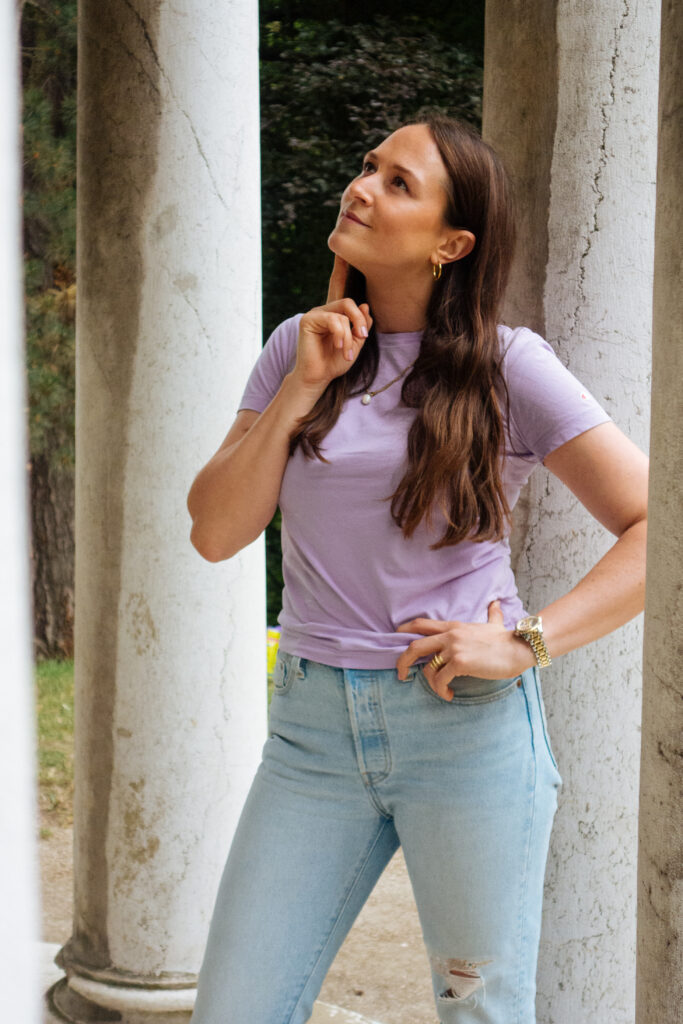
The Austrian Art of Saying "Maybe" (a.k.a. No)
That’s why Austrians invented “Schau ma mal.” It literally means “let’s see” — but everyone knows what it often means: no.
Vague. Polite. Avoidant. Too many “maybes” leave decisions suspended and people guessing.
Quick example:
Johnny: Hey Alessa, willst du mit in den Club?
(I don’t want to go, I just started reading the new Plato biography and had just put a lasagna in the oven.)
My answer: Oh! That’s nice — Schau ma mal.
Translation: I won’t come.
That verbal shrug is too weak. We need to remember the power of a real NOOO. Yes — three Os. We mean it. Not a mouse whisper. Not a shrug. A clear, intentional boundary — NOOO. A measured, firm answer.
Table of contents
Enough reading.
When a Real NOOO Is Necessary
My best NOOO nomination at zflys:
I said NOOO to a disrespectful work partnership/ collaboration.
There were red flags:
– Saying A, doing B.
– Sexual relationships with female project colleagues.
– Over-the-top praise, then cancelling the cooperation.
– Calling our furry pawcess manager “mutt.”
– Constant mockery and demeaning nicknames.
At first I hesitated. Maybe I was too strict. Maybe I overreacted. Maybe it wasn’t that serious. Maybe I was wrong. Maybe I’m right.
But in the end, that NOOO protected people, culture and trust. It was the right call and the best NOOO so far!
Why NOOO Matters
Saying NOOO is not defeat. It’s an act of honest communication.
It protects values and keeps teams human. It saves time and spares energy wasted on polite fog. It builds the kind of culture people want to join — warm, direct and boundary-safe. That’s exactly the kind of communication we champion at zflys: human, hybrid, unifying and with a smile.

How to say NOOO
Three quick scripts for you
Gentle: “I appreciate the idea, but I can’t commit to this right now.”
Firm: “No. This crosses my/ our boundaries. I/ We won’t participate.”
Boundary + offer: “No to this. I’m open to exploring X as an alternative next month.”
A Tiny Practice Tip
Say your NOOO out loud once when you’re alone. It sounds different than in your head. Practice the calm cadence: breathe, short pause, then the NOOO. It lands better.
Want Support? Train Your NOOO
Want to learn to say NOOO with clarity and kindness?
Book a personal coaching session to practice real scripts, role-play awkward situations, and build muscle memory for healthy boundaries. Reach out via our contact form and let’s train your NOOO together.
FAQ
How can I say No without burning bridges?
Use clarity, calm and (if possible) a small offer. Try one of these three short scripts:
Gentle: “Thanks — I appreciate it, but I can’t commit right now.”
Firm: “No. This crosses my boundaries.”
Boundary + offer: “No to this. I’m open to discussing X as an alternative next month.”
Say it aloud once before you deliver it. Breathe. Pause. The calm makes the No land as care, not offence.
What are clear signs that a NO is needed?
Look for patterns, not single mistakes. Red flags include inconsistent behaviour (saying A, doing B), disrespect or mockery, power imbalances (e.g., inappropriate relationships that affect projects), and repeated cancellation of agreed commitments.
When a choice repeatedly risks people’s dignity or trust, that’s a real NO — protecting people and culture.
How do you make saying No part of company culture?
Build systems so No is normal and respected: leaders model it, teams agree shared values and boundaries, there are clear escalation paths, and people get practice (role-play, coaching).
Shared values and consistent action create trust; when everyone knows the values are real, saying No becomes a protective, not punitive, act.

Takeaways

Saying NOOO is an act of stewardship: it protects trust, dignity and the culture you’re trying to build.
A clear no prevents slow erosion — of time, respect and psychological safety — and keeps communication honest and purposeful.
At zflys we believe communication is the central resource; saying no is one of the best ways to guard it.
